Three Eras
Every era asked trust a new question
Every technology era has asked people to trust something new — and every era earned that trust with different machinery.
When machines replaced human work, the question was reliability: “did it perform the task correctly?” Metrics, logs, and audits answered it. When the internet connected the world, the question became privacy: “can anyone access my data?” Consent systems and encryption answered that one.
Generative AI breaks the pattern, because it doesn’t just automate work — it reasons. So the question changed shape: “can we trust how the system thinks?” That question has no established machinery yet. This post is about building some.
Response + Reasoning
The product is now the answer and the thinking
Start with what actually changed. Software used to ship a response: you asked, it answered, and checking the answer was enough. A reasoning system ships two things — the response and the reasoning that produced it.
The observability playbook already covers what to capture: the steps, the calls, the logs. What it doesn’t say is how the record should be shaped so that a person reads it and trusts it. A story makes that gap concrete.
The Question
A student asks; the backend goes to work




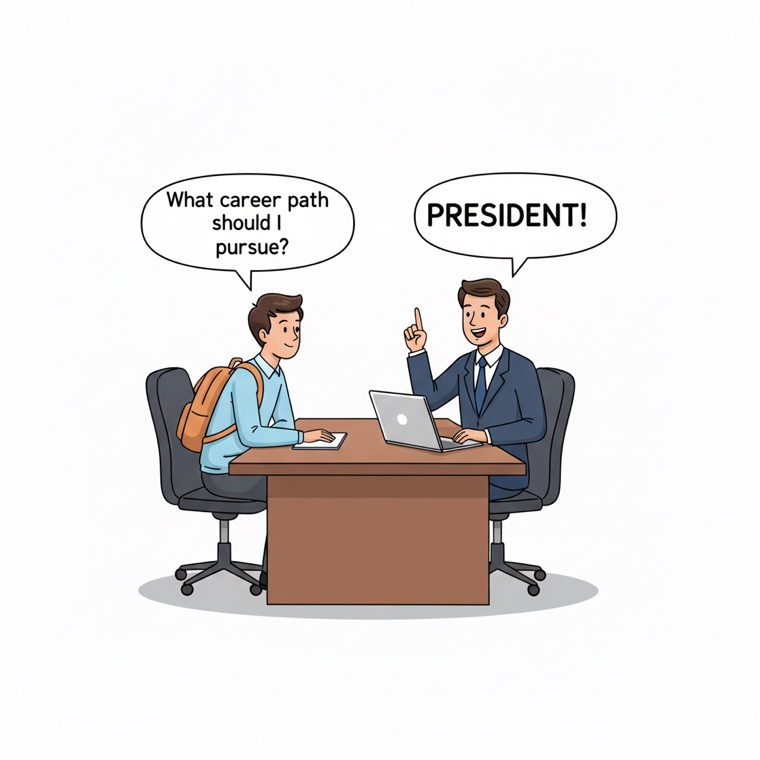
A student opens a chat and asks, in good faith: “What career path should I pursue?”
Behind the frontend, the backend goes to work. It fetches schoolData(123) —
grades, a robotics-fair win, a school-magazine article. It fetches
socialMedia(123) — likes, posts, talks. The answer comes back: “You could
be a great researcher.” Reasonable. Nothing looks broken, because nothing
is broken yet.
The Flip
Two minutes later, the career flips
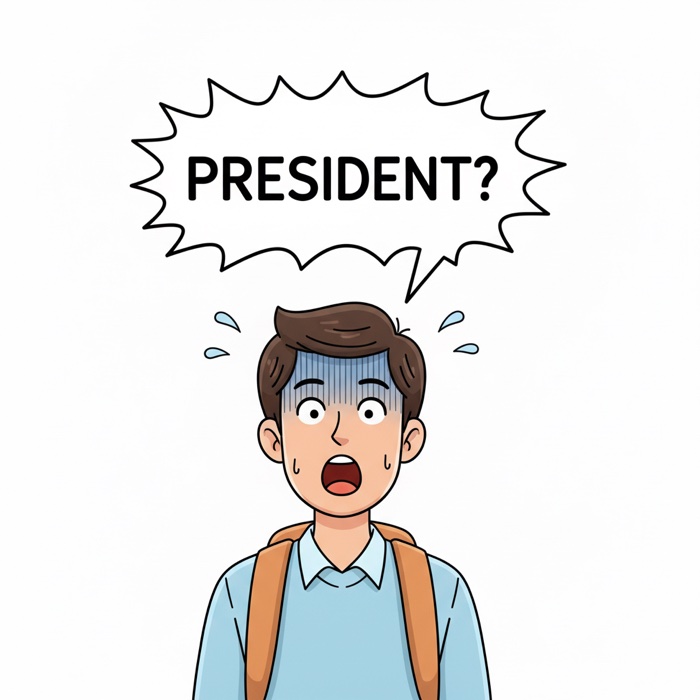
Two minutes later, the student asks the exact same question.
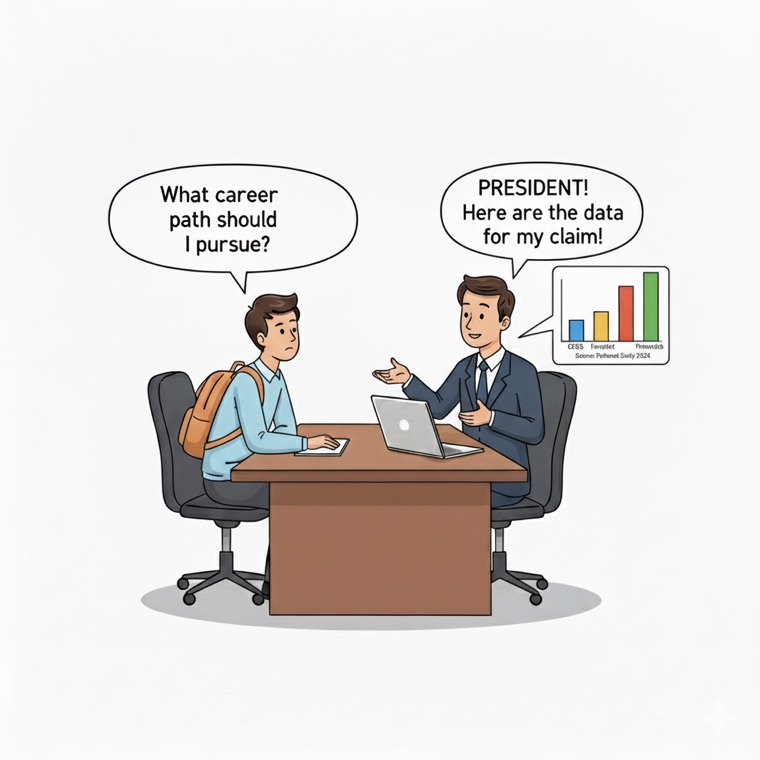
This time the backend fetches only socialMedia(123). The school data never
gets called — a timeout, a stale cache, a flaky tool; it hardly matters
which. The answer comes back: “You could be a leader — maybe President.”
Same student. Same question. Two minutes apart. “How did my career flip in two minutes?”
What Went Wrong
The second answer never saw the school data

A developer digs in. Both answers were fluent, confident, and plausible — read side by side, nothing about the words says which one to trust. The flip only becomes visible when each answer is linked to the data it actually used:
run 1   read schoolData ✓  socialMedia ✓   →  "Researcher"
run 2   read socialMedia ✓                 →  "President"
The second answer never saw the school data. That is the entire bug — and without a recorded link between reasoning and data, no amount of log volume will hand it to you.
Connected Logs
One record, threaded through every agent
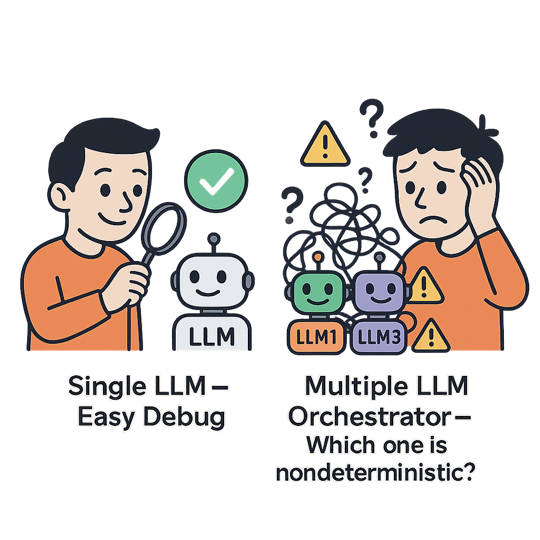
Now make the setup honest to 2026: the school agent belongs to one organization, the media agent to another, and an orchestrator sits in front. Digging through each org’s logs separately doesn’t just get tedious — the link you need runs between them.
So the thing to build is connected logs: one record threading through every agent, where each step keeps exactly two things — the reasoning, and the data that step used. That is the observability half. What remains is the half that actually builds trust: how you show it.
Show The Evidence
Trust forms at presentation
Run the question again with both sources connected, and the answer lands somewhere honest: “you could be a robotics scientist.” Better — but an answer alone still asks for blind trust.
Trust forms at presentation. So present the answer with its evidence: the fair win, the robotics posts, the liked talks, the baseball season. Four candidates — and immediately a new problem. Which of them actually mattered? We need to sort.
The Influence Score
Build the score one term at a time
Take one piece of evidence — the robotics-fair win — and walk its path up the connected log toward the final answer, one term at a time:
- Sp — its similarity to the reasoning step that used it (its parent).
- Sgp — its similarity to the step above that (its grandparent).
- Relevancy — the average across those ancestors: did it stay on topic?
- Persistence — how many ancestors clear a threshold: did it keep mattering, or spike once?
- Depth — how far it sits from the final answer: closer speaks louder.
Normalize, weight, add:
influence(d) = w1·relevancy + w2·persistence + w3·depth
One number per piece of evidence. And to be plain about what it is: every term is a similarity proxy, cheap and deterministic — a ranking aid, not a causal verdict. None of these terms is sacred. This is one way to score influence, not the only way.
Ranked Evidence
Sort it, and show the top with the answer
Now the presentation writes itself. Score every candidate, sort, and show the top evidence with the answer: the fair win first, the robotics posts second, the liked talks third — and the baseball season, honestly, near zero.
The student no longer gets a verdict from a black box. They get an answer with receipts, ranked by how much each one pushed.
It's Real
One reference implementation, not the way
This is running today. agentfootprint ships the influence score as its
default evidence ranker, and — more to the point — ships the seam that makes
it replaceable: localizeContextBug({ scorer }) accepts any
InfluenceScorer, so a contrastive scorer, a learned one, or yours plugs
into the same rail.
import { localizeContextBug } from 'agentfootprint/debug';

await localizeContextBug({ artifacts, embedder }); // default
await localizeContextBug({
  artifacts, embedder,
  scorer: myScorer,         // any InfluenceScorer
});
The influence score is a reference implementation, not the definition. The idea this post argues for is visible reasoning — connected logs plus ranked evidence, shown with the answer. The plug-in point is that statement made executable: the ranking is swappable; showing your work is not.
The Third Pattern
Why we record anything at all

Three posts, three patterns. The flowchart pattern records plans — draw the system, and the code is the drawing. The trail pattern records explorations — no plan, so the record becomes the map. Visible reasoning is the why of the whole series: the record exists so a person can see how the system thinks — and decide to trust it.
Observability gives us connected logs. Reasoning gives us something worth reading. The influence score — one implementation among many — decides what to show first. Together, that is transparency. And transparency, era after era, is how machines have always earned our trust.